

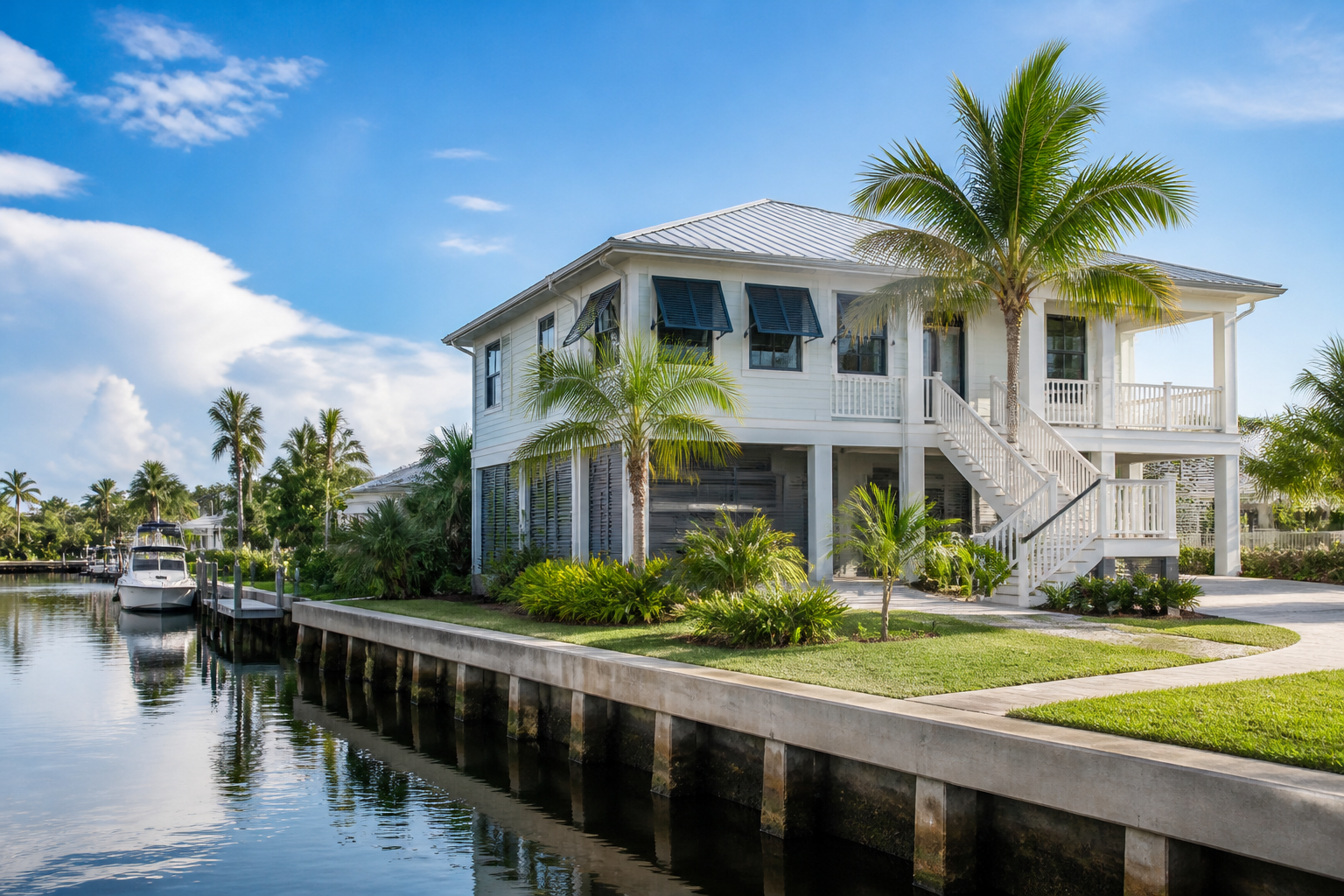
What is flood insurance?
Flood Insurance, explained.
Flood insurance is separate coverage that may help protect a building and its contents from flood-related water damage, which is often handled differently than standard property insurance.
When people typically consider it
- ✓Property owners in flood-prone or coastal areas
- ✓Homeowners with a mortgage that requires flood coverage
- ✓Owners who want protection outside of high-risk flood zones
- ✓Condo or business owners reviewing their flood exposure
What does it cover?
Common coverage areas to discuss.
Building/property coverage
Generally applies to the physical structure after a covered flood loss.
Learn more
Building coverage applies to the structure itself — framing, walls, floors, and foundation — if it’s damaged by flooding as the policy defines it. It’s typically a separate coverage selection from contents, meaning you (or your lender) choose a building limit independent of whatever is carried for belongings inside.
Personal belongings
Can help cover contents inside the building, often available as a separate selection.
Learn more
Contents coverage is usually optional and separate from building coverage, applying to belongings inside — furniture, clothing, electronics — when damaged by flooding. Because it’s often not automatic, it’s worth confirming whether it’s included or needs to be added, especially if the contents represent significant value.
Structural systems
May extend to certain systems like electrical or plumbing, depending on the policy.
Learn more
Built-in systems like wiring, plumbing, and HVAC equipment can be addressed under building coverage, though flood policies commonly apply specific rules to equipment located below the lowest elevated floor — a detail worth reviewing given how many Florida homes have ground-level utility rooms or garages.
Appliances/equipment
Can include certain built-in appliances or equipment, subject to policy terms.
Learn more
Certain permanently installed appliances — a furnace, water heater, or built-in kitchen equipment — may be included, subject to the policy’s specific terms. Treatment varies by policy, so this is worth confirming directly with your agent rather than assuming.
Flood-related physical damage
Addresses direct physical loss caused by flooding, as defined by the policy.
Learn more
This is the core trigger for the policy: direct physical loss from flooding as the policy defines it — generally water from an external source, like rising water, heavy rain runoff, or storm surge, rather than water originating inside the home from a plumbing failure, which typically falls under a different type of coverage entirely.
What may not be covered
Coverage varies by policy and provider.
- ✓Basements and below-grade areas often have specific limitations.
- ✓Certain belongings, like some outdoor property, may have limited coverage.
- ✓Waiting periods can affect when new coverage takes effect.
- ✓Review your specific policy documents and ask your agent about exclusions that apply to your situation.
Worth understanding before you buy
Flood zones and timing, in plain terms.
Two things surprise a lot of property owners: what a flood zone actually tells you, and how soon coverage can start.
- ✓FEMA flood maps generally sort areas into higher-risk zones (often labeled with an “A” or “V”) and moderate-to-minimal-risk zones (often labeled “X”) — a lender is more likely to require flood coverage in a higher-risk zone, but moderate-risk areas still flood.
- ✓Most policies backed by the National Flood Insurance Program (NFIP) have a standard 30-day waiting period before coverage takes effect, so flood insurance generally isn’t something you can add the week a storm is forecast.
- ✓One common exception: if you’re purchasing flood coverage as part of closing on a mortgage, the waiting period is often waived.
- ✓Private flood insurance — coverage offered outside the NFIP by some carriers — can exist alongside or instead of an NFIP policy, with its own terms that are worth comparing rather than assuming are identical.
What can affect coverage and cost?
Cost factors and deductibles.
Pricing is carrier-specific and individual — this is educational context, not a rating formula or a promise of savings.
Flood zone and elevation
Building age and construction
Coverage amount selected
Deductible selection
You pay less out of pocket after a covered loss — but a lower deductible often comes with a higher premium.
You pay more out of pocket after a covered loss — but a higher deductible can mean a lower premium.
Key terms for this coverage
The amount paid, typically monthly or annually, to keep a policy in force.
The portion of a covered loss paid out of pocket before policy benefits may apply.
The maximum amount a policy may pay for a covered loss, subject to policy terms.
A specific situation or type of loss that a policy does not cover.
A formal request to an insurer for payment or service under the terms of a policy.
A valuation approach that may pay to repair or replace property without a deduction for depreciation, subject to policy terms.
A valuation approach that may factor in depreciation when determining a payout.
Get ready for the conversation
Prepare to talk with an agent.
Good to have on hand
- ✓Property address and, if known, flood zone information
- ✓Building details — foundation type, elevation, and construction
- ✓Whether you’re looking to insure the building, its contents, or both
- ✓Any prior flood-related claims or losses
- ✓Your mortgage lender’s requirements, if flood coverage is a condition of financing
Worth asking before you decide
- What is my building and contents coverage limit?
- How does my flood deductible work?
- Is there a waiting period before coverage begins?
- What exclusions or limitations should I know about?
- How does this coordinate with my homeowners policy?
- What documentation should I keep for my property?
- How should I report a flood claim?
A few mistakes worth avoiding
- ✓Assuming flood risk only applies near the coast
- ✓Believing homeowners insurance automatically includes flood coverage
- ✓Waiting until a storm is forecast to consider flood coverage
- ✓Not reviewing coverage amounts after renovations
- ✓Overlooking waiting periods before coverage begins
How claims generally work
Note what happened
Address any immediate safety concerns first, where it is safe to do so.
Document the situation
Photos and notes taken when safe can help support a claim.
Contact your agent or insurer
Report the claim and ask what to expect next.
Provide requested documentation
Insurers typically ask for specific information to review a claim.
Claim is reviewed
Your insurer reviews the claim according to your policy’s terms.
Resolution follows your policy
Next steps and any payment decisions follow the applicable policy language.
Actual claim procedures vary by insurer, policy, and situation. This outline does not guarantee a claim outcome.